

Folgend nun einige Aussagen diverser Developer über das Shader Modell dritter Generation, welches aktuell in GeForce 6800 Ultra Platinen zum Einsatz kommt.
"PS 3.0 supports dynamic conditionals and much larger Shader programs, so it becomes possible to render in a single pass what would previously take many passes. For example, a renderer can more practically combine multiple light sources into a single pass, using a dynamic conditional to handle the properties of each individual light in a single pass.
Regarding the general question of "Why are conditionals needed in pixel Shader programs", I recommend comparing the situation to that of C programs. How many useful C programs don´t contain conditionals? Approximately none!" (Tim Sweeney, Founder, EPIC Games)
"In PS3.0 shaders it´s possible to decrease number of shaders using dynamic branching (one Shader for general lighting) and in such way decrease number of Shader switches and as result increase speed, and also we can utilize dynamic conditional early reject for some cases in both PS and VS and this also will increase speed." (Andrey Khonich, Crytek, Makers of Far Cry)
"It is more about freedom and removing limits rather than what can or can´t be done. Pixel Shader 2.0 would be more like programming in C with only half of the commands available and with half of the RAM available. Pixel Shader 3.0 offers the ´programmers´ a lot more flexibility in terms of control of the logic of execution and length of the program itself. The effects will be easier to write and probably will look more movie like. You may also be able to reduce the number of separate texture passes down as you can write more complex pixel shader programs to do the math necessary." (Rick Johnson, Senior Programmer, Raven Software)
"Any programmer will tell you that higher precision is better, all else being equal; if that high precision comes at an extreme cost then of course it will be used sparingly. As shaders get more complex, the precision requirements rise accordingly. Current games may not take advantage of the extra 8 bits of precision, but it´s likely that future games eventually will." (Mark Davis, Chief Scientist, Novalogic)
"With the GeForce 6800 series, NVIDIA brings long-awaited true high dynamic range imaging to gaming. The ability to perform blending and filtering on floating-point formats (combined with enormous processing power!) really makes for a wonderful feature that we´re definitely looking forward to fully exploit in our Serious Engine(tm)." (Dean Sekulic, Programmer, Croteam)
Mit der PNY CS3250 M.2 NVMe PCIe Gen5 x4 SSD erweitert PNY sein Portfolio im High-End-Segment um ein Modell, das...
In einer heute veröffentlichten Videoankündigung hat Jack Huynh, SVP und GM der Computing and Graphics Group bei AMD, den neuen...
Die Sicherung von Daten sollte für Unternehmen selbstverständlich sein, doch zu oft wird sie auf der Prioritätenliste nach unten verschoben,...
Mascot Gaming ist ein Spieleentwickler aus Malta, der seit 2015 am Markt ist. Es begann als kleines Zwei-Mann-Projekt begann. Heute...
KIOXIA Europe GmbH hat die Entwicklung einer Super-High-IOPS-SSD angekündigt. Der neue SSD-Typ ermöglicht es GPUs, direkt auf den Hochgeschwindigkeits-Flashspeicher zuzugreifen...
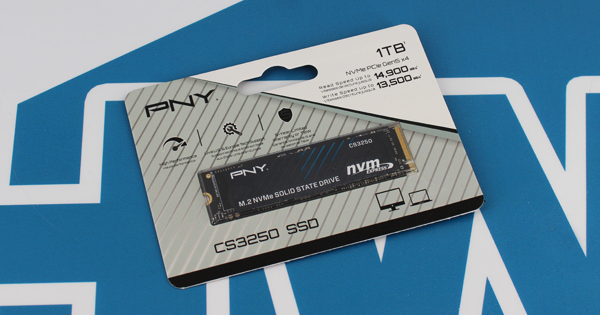
PNY bietet mit der CS3250 eine Familie von PCIe Gen5 SSDs an, die mit Speicherkapazitäten von bis zu 4 TB erhältlich sind. Die Drives erreichen bis zu 14.900 MB/s lesend. Wir haben das 1-TB-Modell getestet.
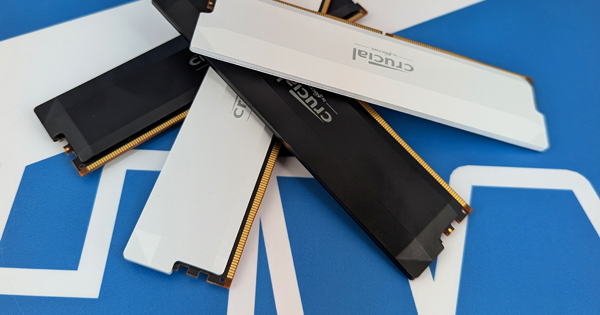
Crucial bietet DIMM-Module der Pro-OC-Familie in unterschiedlichen Konfigurationen an. Wir haben uns zwei Kits mit 6.400 MT/s und Größen von 2 x 16 GB sowie 2 x 32 GB im Praxistest genau angesehen.