

Microsoft hat am heutigen Tage die Hardwareanforderungen für sein neues Betriebssystem Windows Vista vorgestellt, das im Oktober 2006 auf den Markt kommen wird. Laut Microsoft ist für die optimale Darstellung eine Grafikkarte mit 256 MByte notwendig - Anwender, die eine solche nicht ihr Eigen nennen können, müssen auf Features wie Areo Glass verzichten.
Die restlichen Eckdaten sind: Sata-2 Festplatte (hier soll vor allem ncq einen wesentlichen Geschwindigkeitsvorteil bringen) ein Dualcore-Prozessor und 1 GByte Arbeitsspeicher. Weiterhin ist für die verlustfreie Wiedergabe von HD-DVDs ein Monitor mit HDCP-Eingang notwendig, da das Vista interne Treibermodell Longhorn Display Driver Model (LDDM) HD-DVDs über eine verschlüsselte Verbindung zum HDCP-Anschluss des Monitors übertrage - demzufolge müssen Anwender, die weiterhin auf DVI- oder gar VGA-Übertragung setzen wollen, Verluste in Kauf nehmen. Wir haben im Folgenden einige Zitat von Nigel Page, Stratege bei Microsoft Australien, aufgelistet.
Super-phat video cards mandatory
"Video is probably the most critical hardware item for Vista. Things have changed very significantly.
There´s a completely new driver model in Vista called the Longhorn Display Driver Model – LDDM. There has been an explosion in the capabilities of graphics chips – they´re almost universally 3D vector graphics now – and the driver model today we have is bitmap."
You say P-ATA, I say S-ATA (but really, start thinking NCQ)
"There are different flavours of S-ATA drives out there. A lot of first generation ones out there did nothing more than have a different connection style – they had a S-ATA to P-ATA bridge. Basically you got cleaner cabling and not much else.
S-ATA 1 has now evolved into S-ATA 2. The link speed has gone from 150Mbit/s to 300Mbit/s but despite what people think, that´s not the big deal.
Native command queuing (NCQ) is standard in S-ATA 2 and that cannot be done on S-ATA 1 drives that were simply S-ATA to P-ATA bridge drives. NCQ means drive tasks can be reordered in the most efficient path for the heads to move.
That means Windows Vista desktop PCs will be able to have asynchronous completion – the operating system won´t have to wait for one task to complete before going on to something else – the same way SCSI drives work today."
Your PC will run faster with dual core, really it will.
"In order to get the real benefit from dual or multi-core chips you´d think that we have to have very well threaded applications. We don´t have very well threaded apps today; in fact Outlook is probably the best [Microsoft app] in terms of doing things in the background.
But if you look at a standard desktop machine, there are a lot of separate processes running in the background, which can now be split across multiple processes, so you really are going to see performance improvement for OS support for multicore."
BenQ erweitert seine MOBIUZ-Serie um den EX271QMZ. Der 26,5 Zoll große Gaming-Monitor setzt auf ein QD-OLED-Panel der dritten Generation mit...
Mit der E100 1 TB SSD hält Crucial eine preisorientierte NVMe-SSD mit PCIe 4.0 x4 bereit. Das M.2-2280-Laufwerk soll laut...
Im zurückliegenden Monat gab es wieder einige spannende Themen im Bereich Newsmeldungen sowie interessante Artikel und Produkttests. Folgend möchten wir...
Razer erweitert seine Kiyo-Serie um die Kiyo V2 Pro, eine 4K-Webcam für Gamer, Streamer und Content Creator. Die Kamera nimmt...
Wer eine Leiterplattenfertigung anfragen möchte, stellt sich früher oder später dieselbe Frage: Warum dauert ein Angebot so lange, und warum...
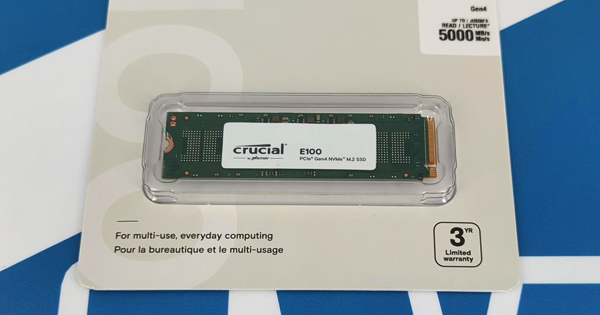
Die E100-SSD von Crucial basiert auf einem PCIe Gen4 Interface und QLC-Flashspeicher von Micron. Die Serie zielt auf Ein- und Umsteiger in die SSD-Welt ab. Wir haben uns das 1-TB-Modell im Test angesehen.
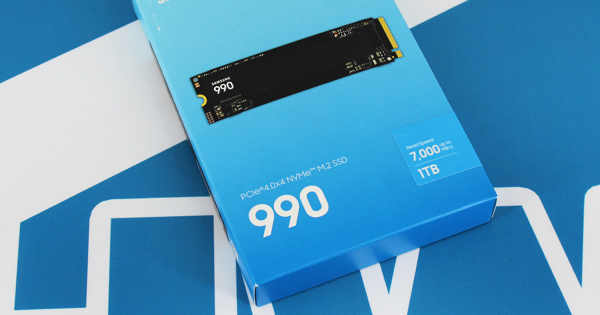
Mit der SSD-990-Familie stellt Samsung eine neue Serie von SSDs für Einsteiger vor. Wie sich die Kombination aus PCI Express Gen4 und QLC-Flashspeicher in der Praxis schlägt, klären wir am 1-TB-Modell.